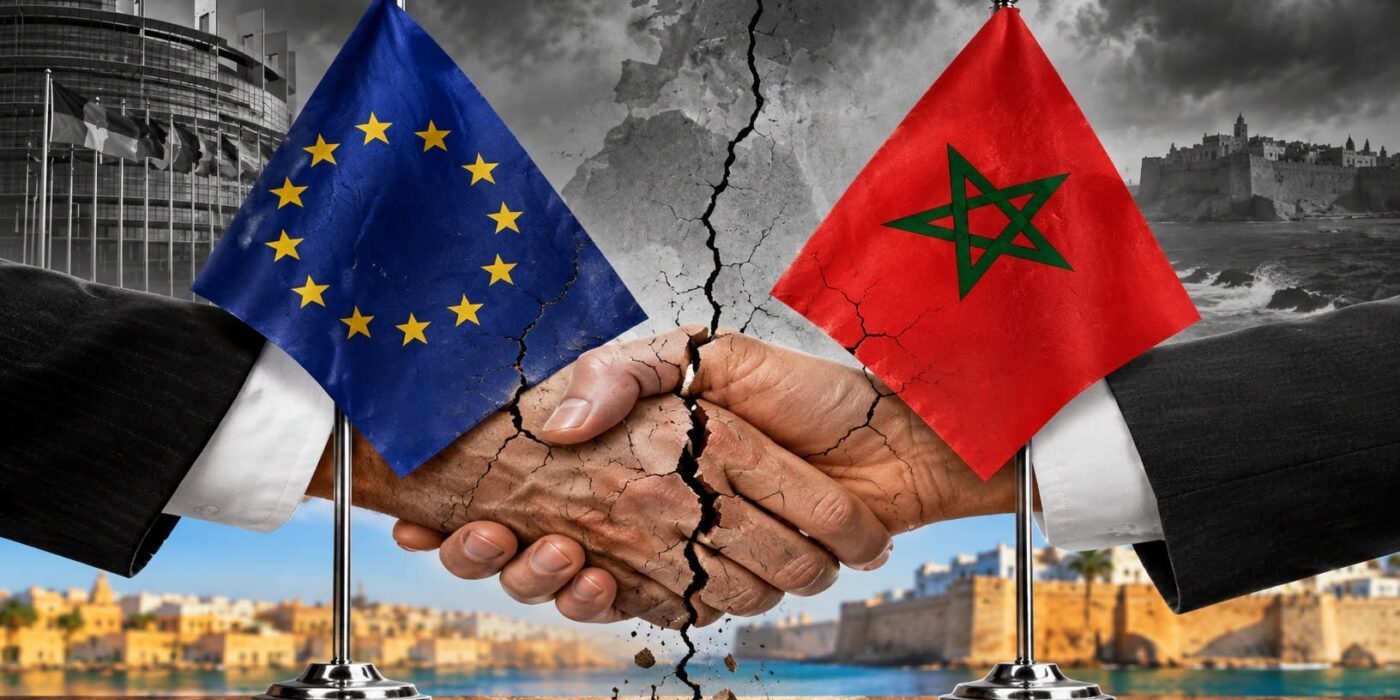
Although they are of a strategic nature, relations between Morocco and Europe have entered a period of tension, losing the positive momentum that had characterised them for two decades. This situation can be explained by the political and humanitarian repercussions of the Ceuta tragedy on 30 July, and the subsequent escalation of tensions between Morocco and Spain, a member of the European Union. Morocco’s strategy of strengthening its ties with the United States and Israel only serves to exacerbate the current climate of mistrust and the crisis of confidence between Rabat and certain European capitals.
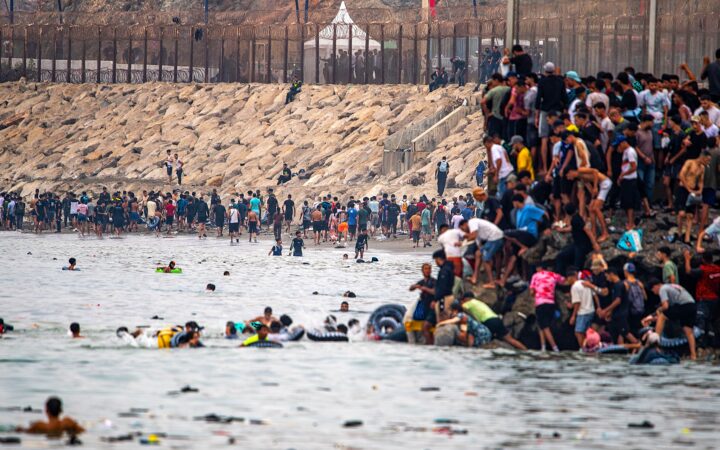
On 30 July 2026, 80,000 people, most of whom were Moroccans, attempted to storm Ceuta, resulting in 141 people drowning. Regarded as the largest single-day mass migration in history unrelated to a natural disaster or war, this event has given rise to three different accounts. These accounts are as follows:
Firstly, it seems that this is a huge wave of migration organised and coordinated by young people via social media. The Moroccan authorities failed to grasp the scale of the situation, initially regarding it as a minor incident. However, they were taken by surprise by its colossal scale when young people from neighbouring coasts made their way to Ceuta.
Secondly, it has been suggested that this was an operation overseen by the Moroccan state in an attempt to draw the world’s attention to the ongoing issue of colonialism, with Morocco demanding the return of Ceuta and Melilla, which are currently under Spanish control. Some newspapers, including those with close ties to the government, have reported that the Anglo-Spanish agreement concerning the removal of borders between Gibraltar and the rest of Spanish territory, reached in July, prompted the Moroccans to organise this mass incursion.
Thirdly, according to a report published by the Spanish newspaper El Confidencial and the British magazine The Economist, this is part of a vendetta between the Moroccan and Spanish intelligence services. According to this account, a former Moroccan intelligence agent, who worked as a hacker for the DGST (Moroccan civilian intelligence services), is said to have fled to Spain with information on Morocco’s espionage activities involving the Israeli Pegasus software. The DGST is said to have sought revenge, which is believed to have prompted the organisation of the 30 July raid. This hypothesis is credible, as the Spanish judicial authorities are investigating the mass incursion of migrants as a planned operation.
Before and after 30 July
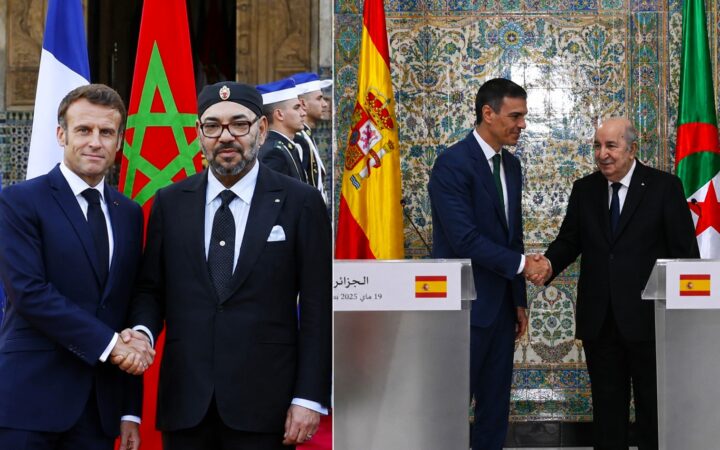
Before 30 July 2026, the date of the mass assault on the city of Ceuta (located in northern Morocco, under Spanish sovereignty, and which Morocco is claiming back, along with Melilla), in which 80,000 people, mostly Moroccans, took part and which resulted in 141 drownings, the trend in relations between Morocco and Europe appeared more positive, driven by several political and strategic developments. The first of these developments was a gradual shift in the position of a number of European countries regarding the Western Sahara conflict, in favour of autonomy. This shift was driven in particular by France, which announced its support for the proposal for autonomy put forward by Morocco and recognised Morocco’s sovereignty over the region. Spain, the former colonial power in the Sahara, also considered autonomy to be the best solution.
The second factor relates to Morocco’s place in the European Union’s new geopolitical vision, which is based on strengthening relations with neighbouring countries, including Morocco, against the backdrop of fierce competition with China and the United States.
However, the events of 30 July have cast doubt on the future of this partnership, particularly due to the sensitive nature of the immigration issue and the sovereignty disputes over Ceuta and Melilla. The delicate turning point in bilateral relations undoubtedly lies in the statement issued by the European Parliament on Thursday, 17 September 2026. The text contained three main points revealing the deterioration in relations between Morocco and the European Union. Firstly, the European Union described the mass incursion into Ceuta as ‘hybrid warfare and an invasion’. This implies that Morocco is responsible for it.
The statement holds out the threat of suspending the partnership agreement between the two parties should Morocco fail to honour its commitments regarding the fight against immigration. For Morocco, this would mean the loss of its preferential access to the European market. This would result in very significant economic losses, given that the European market accounts for nearly 65 per cent of Moroccan exports. The right initially wanted to suspend the implementation of the EU-Morocco partnership agreement, but ultimately backed down so as not to increase the pressure on Morocco. The Socialists played an important role in the European Parliament in supporting Morocco and preventing the sanctions that the right wished to impose on it.
The most concerning aspect of this statement is the European Parliament’s complete support for Spain’s position, which will be perceived as colonialist by Moroccans, the Arab world and Africans. In fact, the European Parliament has called on Morocco not to challenge Spain’s sovereignty over Ceuta and Melilla, and to recognise them as part of Europe’s borders. Ursula von der Leyen, the President of the European Commission, has also supported this position, describing Ceuta as a European border. The European Parliament has never been so clear in its position on this colonial issue before. Nor has any European official ever sided with Spain in the dispute over Ceuta and Melilla as Ms von der Leyen did this week. This remains the darkest chapter in the history of bilateral relations between the two countries.
However, it is notable that France, which has consistently defended Morocco’s interests within the European Union, did not fulfil this role this time. It has been reluctant to do so because of the sensitive nature of the migration issue, and because this type of ‘mass influx’ poses a threat to the whole of the European continent. France also did not wish to come into conflict with Spain, which has sought to give the dispute with Morocco over the Ceuta tragedy a European dimension.
Morocco is turning to Washington and Israel
Against the backdrop of growing tensions between Morocco and the European Union, Rabat signed a diplomatic agreement with Israel in Washington on 16 September 2026, concerning the mutual establishment of embassies. Several media outlets close to the Moroccan government presented this decision as an attempt to seek new partners and diversify its allies rather than relying solely on the EU. However, others claimed that it was a retaliatory move against the European Union.
This aligns with the quasi-official narrative that Washington’s recognition of Morocco’s sovereignty over Western Sahara was influenced by the Israeli lobby in the United States. Similarly, Spanish newspapers such as El País, El Mundo and ABC interpreted the decision to exchange ambassadors in this sensitive context as Morocco’s response to the Ceuta crisis and the European Union’s bias in favour of Spain. In practical terms, the decision caused a stir in Morocco, as it was made during the election campaign for the 23 September parliamentary elections and went against the views of the majority of Moroccans.
While the European Union has no objections to Morocco’s relations with Israel and the United States, it is not keen on the growing influence of these two geopolitical players in Morocco. Morocco’s economic relations with these two countries are not as strong as those it maintains with European countries. The EU accounts for 67 per cent of Morocco’s imports and exports, while the US accounts for just 10 per cent. This figure is largely due to arms imports rather than normal economic activity. As for trade with Israel, it amounts to just a few tens of millions of dollars, which is negligible.
Several European political figures, including those on the radical left and right in Spain, have suggested that Morocco could be used by these two groups to put pressure on the European Union on various issues. Among the rumours circulating about the Ceuta tragedy is the allegation that the Mossad and the Americans were behind the mass incursion into Ceuta in order to punish the Spanish Prime Minister, Pedro Sánchez, for his sympathy towards Palestine and his opposition to the policies of the former US President, Donald Trump. Sánchez did indeed allude to the role of social media networks with close ties to Israel and Russia in manipulating migrants and inciting them to storm Ceuta.
At the same time, this interpretation is based on a previous incident that resurfaces periodically: Between 2019 and 2021, Morocco was allegedly spying on European leaders, including French President Emmanuel Macron and Spanish Prime Minister Pedro Sánchez, using the Israeli Pegasus software. Morocco has categorically denied using this software. Another example is Washington unofficially suggesting the possibility of relocating the Rota base, which is situated in southern Spain, to Morocco.
From a geopolitical perspective, the EU considers Morocco to be a strategic partner for Europe’s future, as part of its efforts to compete with China and the United States. Therefore, it will not view the involvement of a country that receives significant European financial aid, such as Morocco, favourably, as this could result in it aiding its competitors. While the European Union is seeking to form alliances with third countries, as it did with Canada this week, it will not view US political and military involvement in Morocco favourably, particularly as it brings no economic benefit to the country. In its editorial of 19 September 2026, the newspaper El País wrote: ‘While the European Union’s tone towards Morocco has hardened due to the crisis surrounding the Ceuta tragedy, Rabat has announced an agreement with the United States and Israel aimed at strengthening their tripartite cooperation on the international stage, as well as the official opening of two embassies with Israel and the exchange of ambassadors.
Spain wins
The Ceuta tragedy remains, however, a turning point in relations between Morocco and Europe, which deteriorated considerably when the Europeans threatened Morocco with the suspension of the partnership agreement. Spain is the big winner in this crisis, on several levels. On the one hand, it has prompted the European Union to recognise Madrid’s absolute sovereignty over Ceuta and Melilla and to demand that Morocco does not challenge this sovereignty. On the other hand, it has pushed the European Union to become more involved in monitoring the borders between Ceuta and Melilla and Morocco in order to combat illegal immigration.