Note: This opinion piece is written by Rodrigo Rato and published in the conservative Spanish newspaper La Razón (10’08’2026). Rato was Minister of Economy and Deputy Prime Minister in José María Aznar’s government in 1996: he is one of the key figures in Spanish decision-making over the last thirty years. His views represent the conservative wing of the Spanish establishment. The article was published in the context of the influx of nearly 80,000 Moroccans into Ceuta on 30 July 2026.
These days, we Spaniards are talking about Morocco much more than we have done in many years, following the greatest humiliation we have suffered at least since the famous Green March, at the end of the Franco dictatorship. This influx of almost 80,000 Moroccans into the city of Ceuta in less than 24 hours amounts to many things, certainly, but above all to an extremely serious case of national insecurity, which the President of the Government himself has not hesitated to describe as a “violation of our sovereignty.”
So I have asked myself how important Morocco is to Spain. If we measure it in economic terms, bilateral trade between Spain and Morocco amounts to around €23 billion a year: €13 billion in Spanish exports to Morocco and €10 billion in Moroccan imports to Spain. We are by far Morocco’s largest trading partner, while, frankly speaking, the North African country accounts for very little in our trade balance. Our total bilateral merchandise trade reached €835 billion in 2025. It is true that Morocco is important to specific sectors of our economy—such as car components, textiles, machinery, fishing and tomatoes. But it is nowhere near our main supplier or our main customer, nor is it a market that we could not replace with relative ease. Algeria, for example, has twice its GDP.
From the point of view of investment, Spanish investments are the most important for Morocco, while the reverse is insignificant: they represent a stock of €2 billion, out of a worldwide total of €600 billion. Almost 28,000 direct jobs depend on these investments, which are growing. Our neighbour aspires to become Africa’s commercial gateway, a strategy it shares with Nigeria, Algeria, Egypt and Angola. Its growth has accelerated in recent years to reach 4.9% annually, with a 12% dependence on the primary sector, which accounts for 30% of its employment. But climate change is a major risk for Morocco.
On the other hand, we have approximately one million Moroccans living in our country, representing the largest number of foreign residents in Spain and, consequently, also the largest group of foreign recipients of social assistance. Taken together, they represent 10% of all foreigners residing in Spain, a figure that is not decisive in any respect.
We often mention the existence of the cities of Melilla and Ceuta, under Spanish sovereignty since the end of the 15th century and the middle of the 17th century respectively, as the main reason why Spain’s relationship with Morocco should be considered a priority. Judging by Morocco’s attitude, this does not appear to be exactly the case. Rather, successive governments have expressed, and even demonstrated, a firm desire for our presence in these cities to cease to exist.
Perhaps Spain should make it clearer to its partners, starting with Rabat, that our presence on the southern side of the Strait of Gibraltar is a strategic priority that we are prepared to defend with or without assistance. And I include in this category the territorial waters of the Canary Islands. As we have seen in other cases, this is achieved with resources—that is, with money. I see no reason why military resources should not be among them, but certainly also by using the State’s investment power through SEPI, which should make itself felt more forcefully. One does not need much imagination to think that, in the age of remote working and artificial intelligence, the two cities should host centres for public or semi-public companies equipped with technological tools. Let your imagination run free and envisage a Gibraltar in both cities, a structure like the one we have just agreed with the United Kingdom a few kilometres away.
As I have said, our bilateral trade with Morocco amounts to around €23 billion a year. I fail to see why a more or less considerable part of it should not pass through the cities of Ceuta and Melilla. Given that the collection of corporate tax falls under the State’s jurisdiction and does not affect regional government financing, the State’s trade or tax officials should be capable of designing a system of exemptions and incentives to encourage the establishment in both cities of the companies that trade most with Morocco.
Technology should also help us protect our borders. At a minimum, to the same level that the traffic authorities use to monitor Spaniards at the wheel. It should be made very clear here that people who enter either of these two cities illegally will be registered before being expelled, and will never again be allowed to enter Spain under any pretext. It is surprising that our authorities facilitated the departure of more than 70,000 people who, in the President’s own words, had violated our sovereignty. No one can fail to see that carrying out those checks would have presented certain logistical difficulties, and that it would have been necessary to set up tents, provide food, and so on. I am of the opinion that these efforts would have been preferable to the current situation.
We have been told, in the little that we have been told, that Moroccan social media were behind this influx. On this matter too, it is striking that the world’s leading tourist power is unable to communicate through social media the risks that people would face by entering Spain illegally. It is worth remembering in this regard that Spanish television channels are widely watched in Morocco, something that does not happen in the opposite direction. Without pretending to be Machiavelli, the presence of Moroccan political immigrants on Spanish television programmes would surely not be appreciated by the authorities, but it might be appreciated by the population.
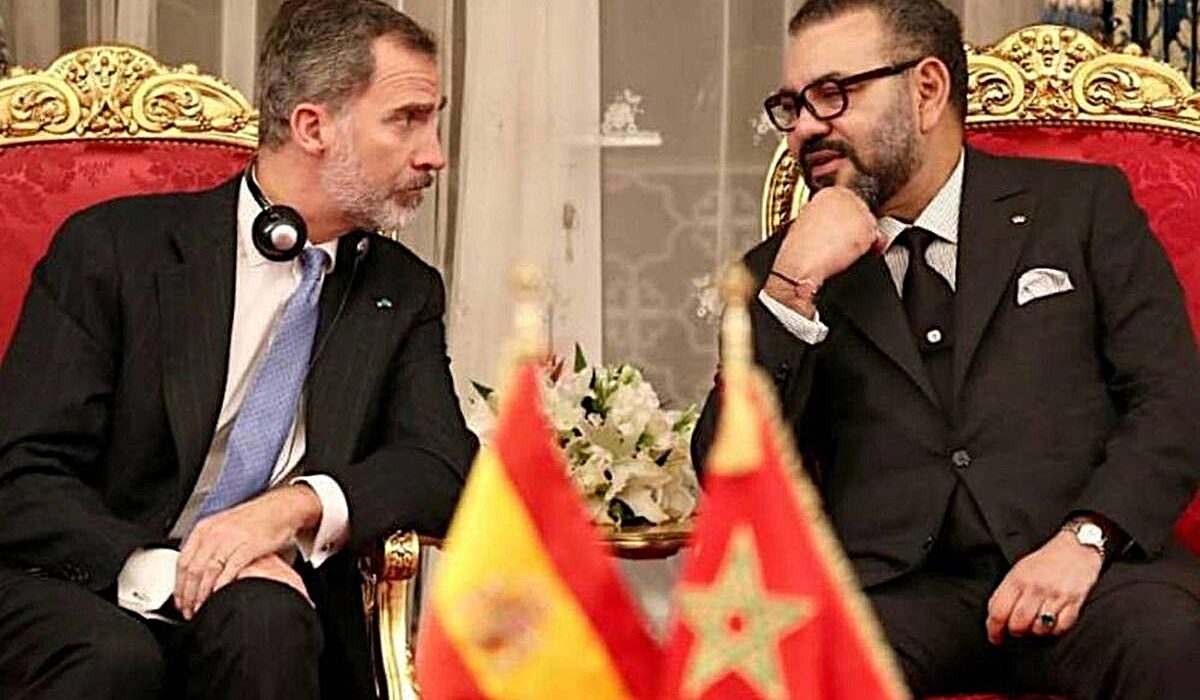
If neither the economy nor social power, nor even geography, make a situation of Spanish weakness vis-à-vis Morocco inevitable, why do we behave in such a timid manner? In my modest opinion, at least since the creation of an independent Morocco in the 1950s, Spanish political and public opinion has accepted that it is in our interest for a monarchical government, belonging to the family currently in power, to exist. It is difficult for me to say that this was an erroneous analysis at the time. But I allow myself to ask, in today’s world: what difference does it make to us who governs Morocco? I will be told, rightly, that a jihadist government would be very much against our interests. Certainly, no more so than the attack of 11 March 2004. In this matter, we would certainly not be alone. The United States and France—and perhaps even Algeria—would hardly look favourably upon the establishment of a radical Islamic regime at the western end of the Mediterranean. So if such a situation were to arise, we would have allies with whom to try to reverse it.
It seems more likely that such a political change would result from popular discontent, similar to what has happened in Tunisia and Algeria. If that were the case, we would find ourselves with a civilian regime with which we could undoubtedly reach an understanding just as well as—or who knows, perhaps better than—with the current monarchy. Given the attitude of the King of Morocco, perhaps it would be a good idea to let him know that we really do not care whether he keeps his crown or loses it. Nor do I believe that the much-vaunted effectiveness of his intelligence services is beyond the capabilities of ours, if their commanders allow them to act.
Another argument that is frequently repeated, and with increasing intensity, is that the United States might be considering changing its military presence in Spain in favour of increasing its bases in Morocco. I am of the opinion that the United States will not abandon either shore of the Strait of Gibraltar. One might think that the Americans are quite happy to have bases in less democratic regimes, which sits rather poorly with their presence in Germany, Japan, Poland, the United Kingdom and Italy. I am more inclined to think that Washington intends to keep things as they are. It is true that there will be Spanish or Moroccan governments with better or worse contacts there at any given time. Let us appoint appropriate ambassadors in Washington with clear instructions on this point. As for alliances with Israel, with all due respect, Morocco’s role in the Arab world in general and in the Middle East in particular is of very little relevance.
Our southern neighbour is a relatively poor country, with a gross domestic product of around €150 billion, slightly more than the amount tourists spend in Spain in a single year and representing 10% of our GDP; with a per capita income of around €4,800, 12% of Spain’s, and moreover distributed very unevenly; and with population growth currently at 0.9% per year, half of the population being under 50, which inevitably leads to very considerable youth unemployment of 37%. It is therefore not a country whose social stability is guaranteed under its current rulers. This is perhaps Spain’s greatest interest: contributing to a richer and fairer country. Hence the importance of our investments and exports to the country, particularly for them. These objectives cannot be achieved without an increasingly intense relationship with the European Union, which in turn can only be developed through Spain.
There is little doubt in my mind that we have reached an unsustainable point for Spaniards. We have more than enough political, financial and military means to defend our strategic interests. And defending our southern border, together with our presence on both sides of the Strait of Gibraltar, is a legitimate, valid and very important interest for Spaniards today and in the future. We do not need anyone’s approval to develop defence systems, export incentives, or to choose the location of technological centres in whichever parts of our territory we deem appropriate. Moreover, we have the right, as well as the obligation, to secure our borders and make it clear to those who visit or wish to reside in our territory that they must do so legally.
I do not know whether these obvious points deserve some grandiose state pact, or simply a territorial policy worthy of the name. What I can venture to say is that it is already time, as our grandmothers and mothers used to say, to make things clear and keep the chocolate thick. Guaranteed.