Having been abandoned by Washington, Saudi Arabia is relying on the European Union — and France in particular — to protect freedom of navigation in the Red Sea and the Bab el-Mandeb Strait, as well as the oil facility at the port of Yanbu. However, France’s greatest challenge in this mission is the multitude of military fronts on the international stage.
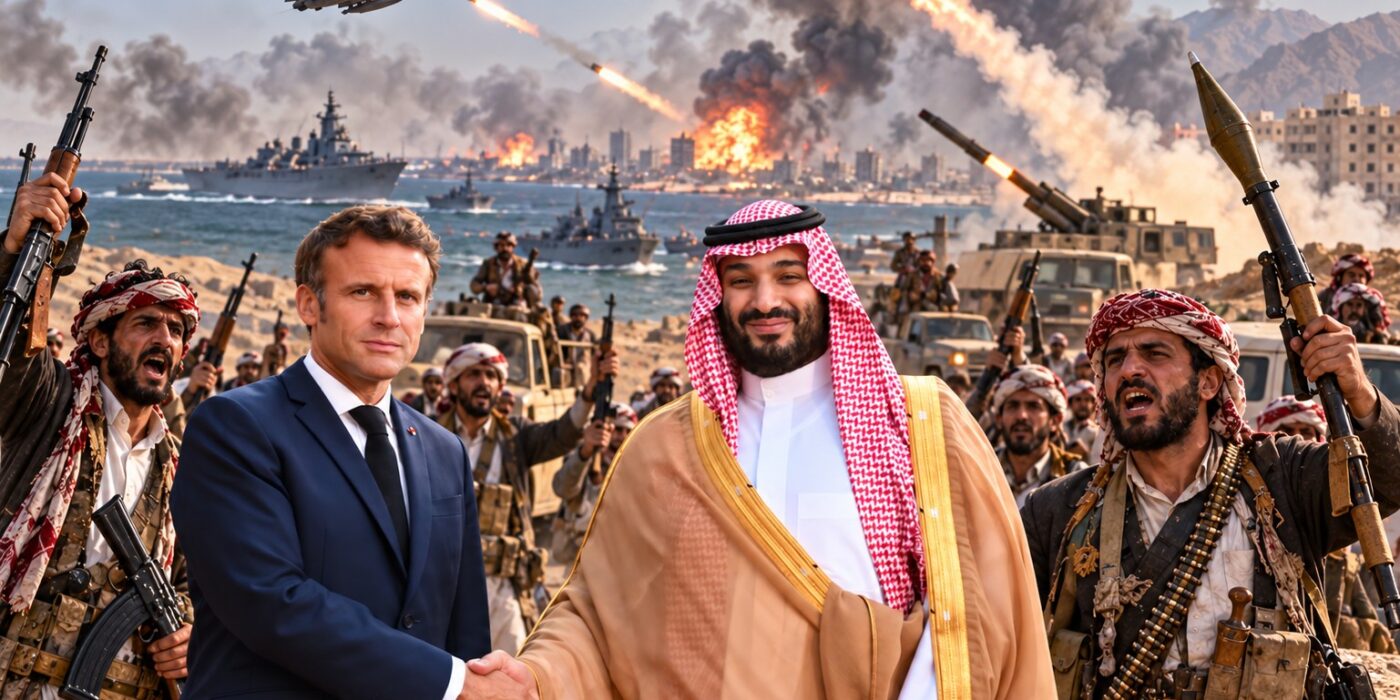
On 24 September, French President Emmanuel Macron announced France’s intention to protect the Saudi port of Yanbu, which is located on the Red Sea. He specified that France would send radar and defence systems, as well as troops to operate them and protect the oil facility. The oil pipeline connecting eastern Saudi Arabia to Yanbu on the Red Sea is an alternative route that can be used to avoid disruptions to exports in the Persian Gulf. Meanwhile, the port is currently the target of attacks by the Houthis, which have led to a decline in Saudi oil exports.
In order to avoid any tension with the Houthis, he emphasised that the French military forces’ mission would be defensive, and that they would neither participate in combat nor become involved in any regional conflict. He justified this decision by citing the need to ensure the transport and export of oil through the Red Sea, given the current disruptions to the region’s energy sector. Macron is aware that confronting the Houthis would result in France being denied passage of its ships through the Bab el-Mandeb Strait.
From a military perspective, while France’s decision is significant, it could ease the pressure exerted by the Houthis to some extent. However, its effectiveness will remain limited for several reasons.
Firstly, France cannot deploy a large number of defence systems, particularly those carried aboard frigates, because it is engaged on multiple fronts. France has military forces stationed near the Bab el-Mandeb Strait as part of the European ‘Aspides’ mission to ensure safe navigation. France also has ships in the Black Sea to monitor Russian military activity, and it maintains forces along its coasts in anticipation of any military emergency — especially given the current climate of tension between Europe and Russia. In addition to its defence systems and warships, France will deploy Rafale fighter jets and will rely on its two military bases in the United Arab Emirates and Djibouti for this mission. Given the geographical proximity and similarity of the missions between protecting Yanbu and ensuring the safety of navigation in the Bab el-Mandeb Strait, France will undoubtedly direct the frigate participating in the “Aspides” mission towards the Red Sea.
Secondly, like other Western countries, France lacks the ammunition, particularly air defence systems, to counter the Houthis if they were to intensify their attacks on Saudi Arabia and French targets in the Middle East, such as ships. One reason for the halt in US strikes against Iran is that stockpiles of air defence systems have declined more sharply than those of offensive missiles. Indeed, most European countries have seen a significant drop in their stockpiles of defence systems as they have supplied some to Ukraine in its conflict with Russia. Furthermore, Western countries participated in retaliatory strikes against attacks targeting Israel during the Iranian bombings in June last year, depleting a large portion of their defence missiles in the process. Additionally, producing these missiles is a lengthy process: they are used up quickly in wartime, but production is slow.
Thirdly, France does not have defence systems that are more advanced than those of the United States for countering the near-hypersonic ballistic missiles used by the Houthis. In fact, Saudi Arabia uses more sophisticated and precise systems, such as the “Patriot” and “THAAD”. However, these systems are unable to intercept all of the Houthis’ missiles and drones. Some have indeed bypassed Saudi and Western defence systems to strike military bases and oil facilities in the United Kingdom. It is difficult to say whether French air defence systems such as the SAMP/T NG will succeed where American systems have failed.
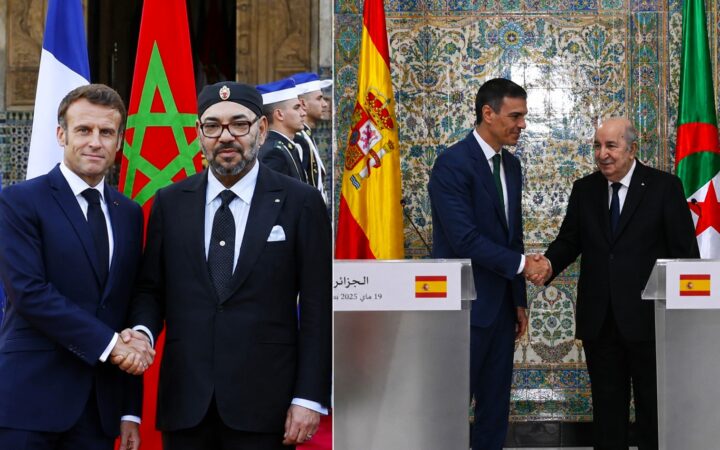
France’s announcement of its support for Saudi Arabia is part of the two countries’ military and defence cooperation, a partnership which took a major leap forward following Saudi Crown Prince Mohammed bin Salman’s visit to Paris last August. It also follows the United States’ relative withdrawal from the fight against the Houthis, which has left the Saudis to face them alone, as Camille Loin, an Arabian Gulf expert at the European Institute of International Relations, points out. This highlights the extent to which Saudi Arabia is relying on European countries as new allies. Media reports have indicated that an Italian ‘Eurofighter’ jet was damaged on 18 September at the Taif air base, thereby confirming the presence of European forces in Saudi Arabia to counter Houthi attacks. According to the Italian press, the government in Rome has acknowledged the presence of Italian fighter jets helping to secure oil resources.
In an analysis of the French decision from an international perspective, Le Monde estimated in its 26 September 2026 editorial that this marked a true geopolitical turning point, as Riyadh sought new allies amid U.S. hesitation to support it. This time, cooperation between Paris and Riyadh goes beyond training exercises and a few joint manoeuvres, resulting in a genuine military alliance. This is also the second agreement of its kind to result from the war with Iran, following Paris’s decision in March last year to contribute to the defence of the United Arab Emirates.
The biggest challenge for France remains the fact that the U.S. Fifth Fleet failed to put an end to the Houthi attacks between 2023 and 2025. Admiral Brad Cooper, who was then deputy commander of U.S. Central Command and led Fifth Fleet operations in the region, described these operations as “the largest and most intense conducted by the U.S. Navy since World War II.” This is one of the reasons that led the Pentagon to withdraw from the confrontation with the Houthis. Will France succeed in defending Saudi Arabia against the Houthis? Future events will provide the answer.